
Exploring Consensus Miami 2026: Notes from the Ground
Honest observations from a week of Consensus and side events — what the industry is actually building, and what it's just talking about.
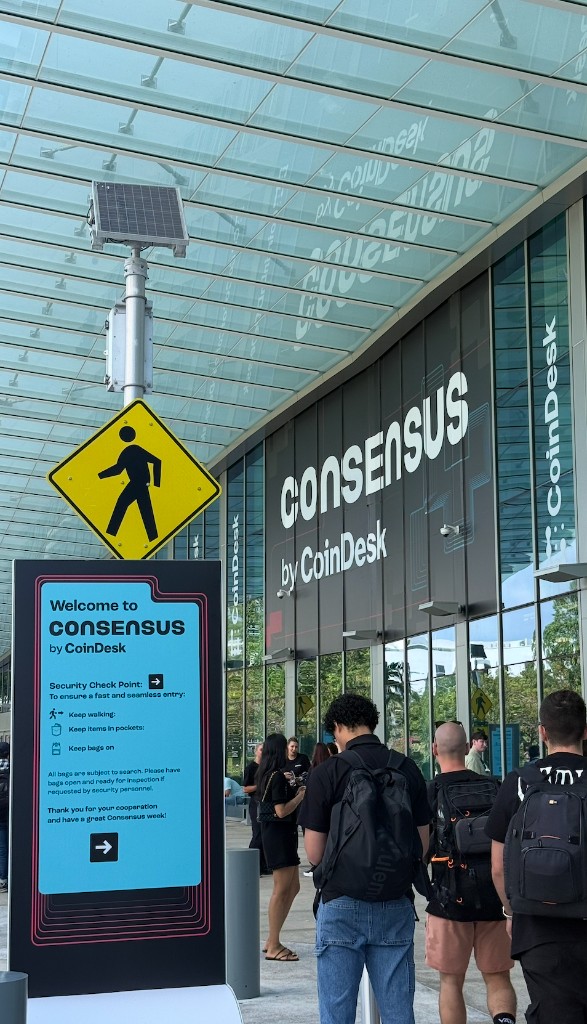
Three days inside the Miami Beach Convention Center, plus a packed week of side events. Cayman receptions, agent-economy summits, RWA luncheons, exchange dinners. A lot of conversations, a lot of hype, a few signals worth keeping.
This is the BitFashioned SEZC read of the week. Skeptical where it should be, bullish where the infrastructure is actually shipping.

TL;DR
Skeptical where it should be, bullish where the infrastructure is actually shipping.
- AI agents are oversaturated at the application layer, but the infra layer (x402 payments, ERC-8004 identity, ERC-8183 commerce) is now live on mainnet and is the most important quiet shift of 2026.
- Token launches were absent. The headline deals were acquisitions and integrations: Bullish + Equiniti ($4.2B), Kraken + MoneyGram, DTCC + L1s on tokenized corporate actions.
- RWAs are no longer hype — tokenized RWAs tripled to $19.3B in Q1 2026, and RWA perpetual volume hit $524B last quarter, more than all of 2025.
- Tier-2 exchanges are squeezed. Spot CEX volume fell -39% in Q1. The survival pivot is commodity perps and 24/7 trading of traditional assets.
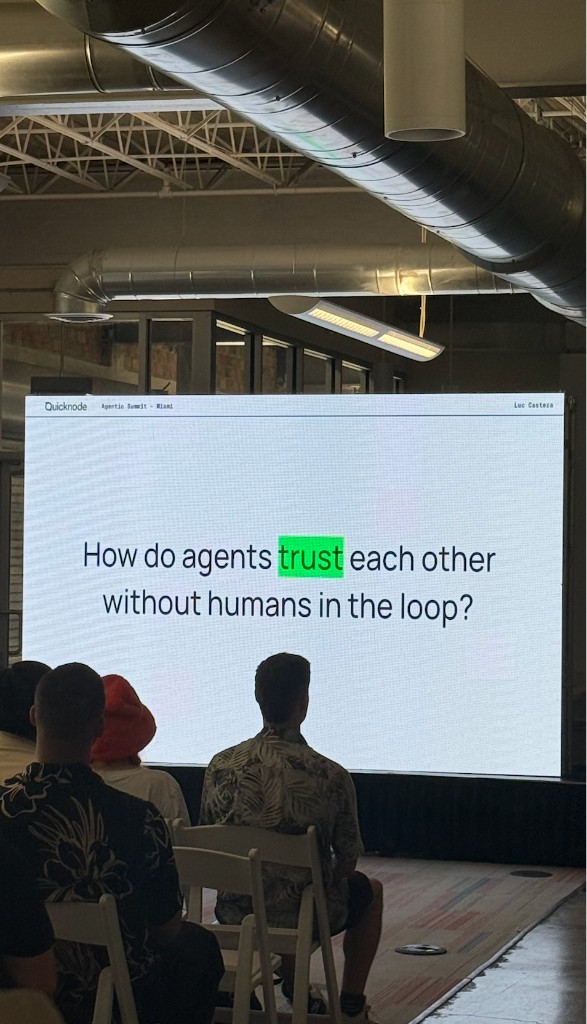
- Agent verification is the unsolved problem. Identity exists. Reputation exists. Verifying that an autonomous agent's behavior matches its stated intent — nobody has shipped that.
1. The agent stack is real. Most agent products are not.
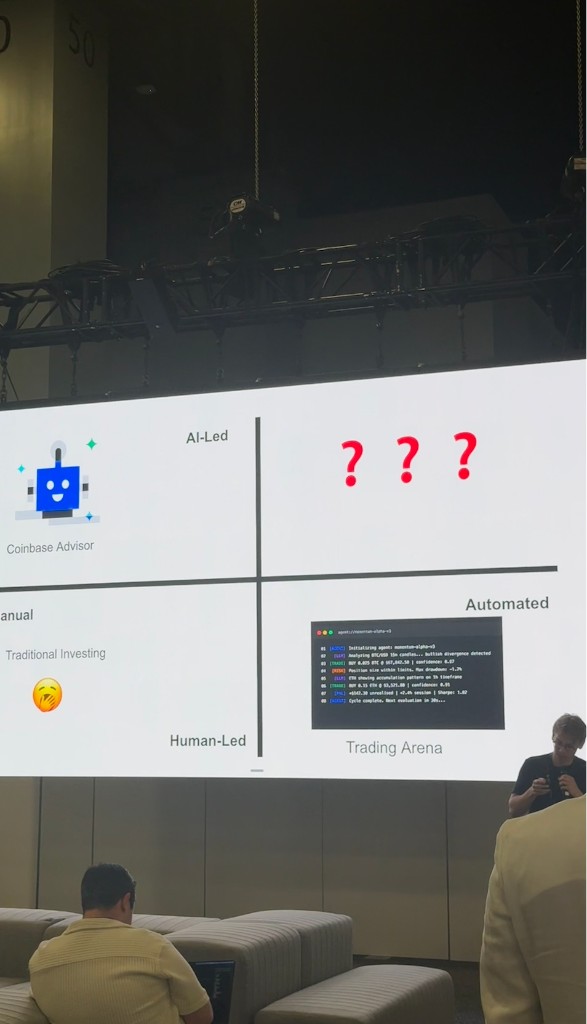
Walking the floor and the side events, AI agents were everywhere. Every panel mentioned them. Every demo featured one. Most of them did the same thing: read market data, execute a trade, manage a wallet.
That's the application layer, and it's already saturated.
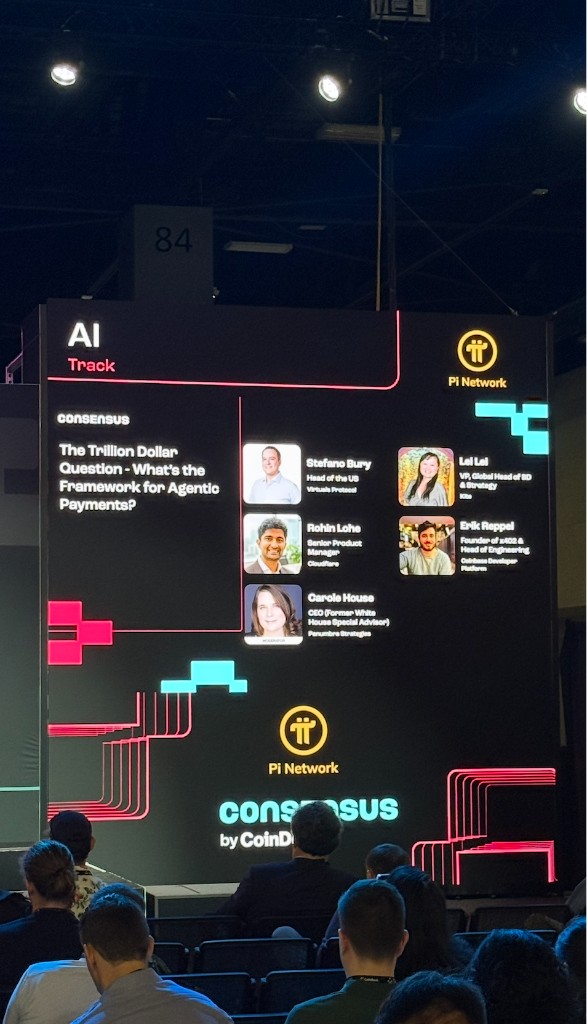
The actually-important work is one layer down. Three standards came of age in the last six months and were front and center at the Agentic Summit and across multiple sessions:
- x402 — HTTP 402 Payment Required, revived as a payment rail for autonomous agents. Now processing $100M+ in payments and integrated with Stripe, AWS, Cloudflare, Vercel.
- ERC-8004 (Trustless Agents) — three on-chain registries (Identity, Reputation, Validation) that let agents discover and trust each other across organizational boundaries. Authored by people from MetaMask, Ethereum Foundation, Google, and Coinbase. Live on mainnet since March.
- ERC-8183 (Agentic Commerce) — a job primitive: agents agree on work, escrow payment, settle based on verifiable attestations.
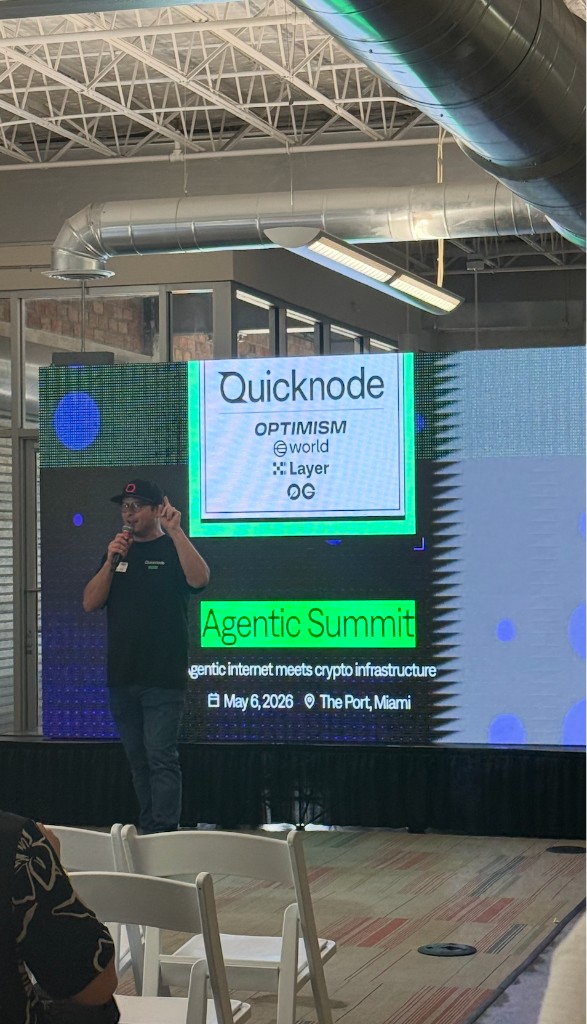
Combined with Circle's nanopayments (gas-free USDC down to $0.000001), the rails for an actual agentic economy are now in place.
Erik Reppel (x402 founder) sized the agentic economy at $3-5T by 2030 on the Consensus stage. That number is repeated everywhere now. Whether or not it's right, the infrastructure is being built as if it is.
The unsolved part: ERC-8004 explicitly does not verify that an agent's advertised capabilities are functional or non-malicious. Trust models are pluggable — reputation, validation, TEE attestation — but the actual behavioral verification layer is left as an exercise for the ecosystem. That gap is the most interesting open problem in agent infrastructure right now. Navalabs is one of the few teams we would point to as a leader here — they treat behavioral verification as the product, not a bullet on a standards deck.
2. Token launches were absent. Integration deals took over.
If you came expecting new chains and new tokens, you came to the wrong conference. Charles Hoskinson said it on stage:
"There have been 11 million tokens issued over the years. We have enough of them. What I want is cooperation."
Day 1 headline news was overwhelmingly M&A and partnerships:
- Bullish acquiring Equiniti for ~$4.2B to build tokenized securities infrastructure
- Kraken × MoneyGram for crypto-to-fiat off-ramps in 100+ countries
- Sumsub × Chainlink integrating KYC with the Automated Compliance Engine
- OwlTing's OwlPay Wallet Pro for Agents — a self-custody wallet built for AI agents
- Jito's JTX — a self-custodial trading platform on Solana with CEX-grade execution
- GoMining + Babylon — Bitcoin mining rewards via trustless vaults
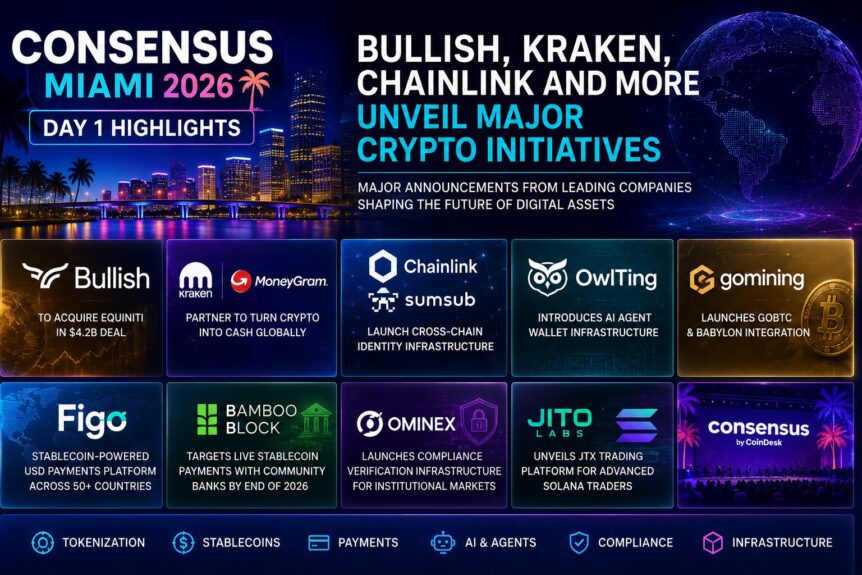
This is web2.5: existing companies plugging crypto into traditional rails. Less aspirational, more operational. The maturation is real, but if you were looking for the next L1 narrative, this conference didn't have one.
3. L1 chat was quiet. The DTCC story was the biggest L1 signal.
L1 tokens broadly underperformed in 2025 despite the institutional adoption tailwind. Despite L1s capturing 90% of crypto market cap, they now collect only 12% of fees (down from 60% in 2025). Value has moved decisively to the application layer.
The most interesting L1 moment came from outside crypto: DTCC CEO Frank La Salla said his organization is working with several L1s to bring corporate actions — dividend payments, tender offers, post-trade events — onchain. That's Wall Street's actual plumbing, not another tokenization pilot. If DTCC ships this, every tokenized security on those L1s gains real settlement infrastructure.
Notably, La Salla also flagged the bottleneck: most blockchains take days to process corporate actions, while DTCC handles millions of dividend payments per day. The performance gap is the integration constraint.
4. RWAs are no longer hype. They're a real market with real flows.
The Real Yield Summit at RWA House (Figure × Sentora) had ~900 people. The data backs the attendance:
- Tokenized RWAs (ex-stablecoins) tripled from $5.4B to $19.3B between early 2025 and Q1 2026 (CoinGecko)
- Tokenized commodities up 289% to $5.5B, dominated by gold-backed tokens (PAXG, XAUT)
- Spot trading on tokenized gold hit $90.7B in Q1 2026 — surpassing the $84.6B traded in all of 2025
- RWA perpetuals volume reached $524.8B in Q1 2026, more than the $313B from all of 2025
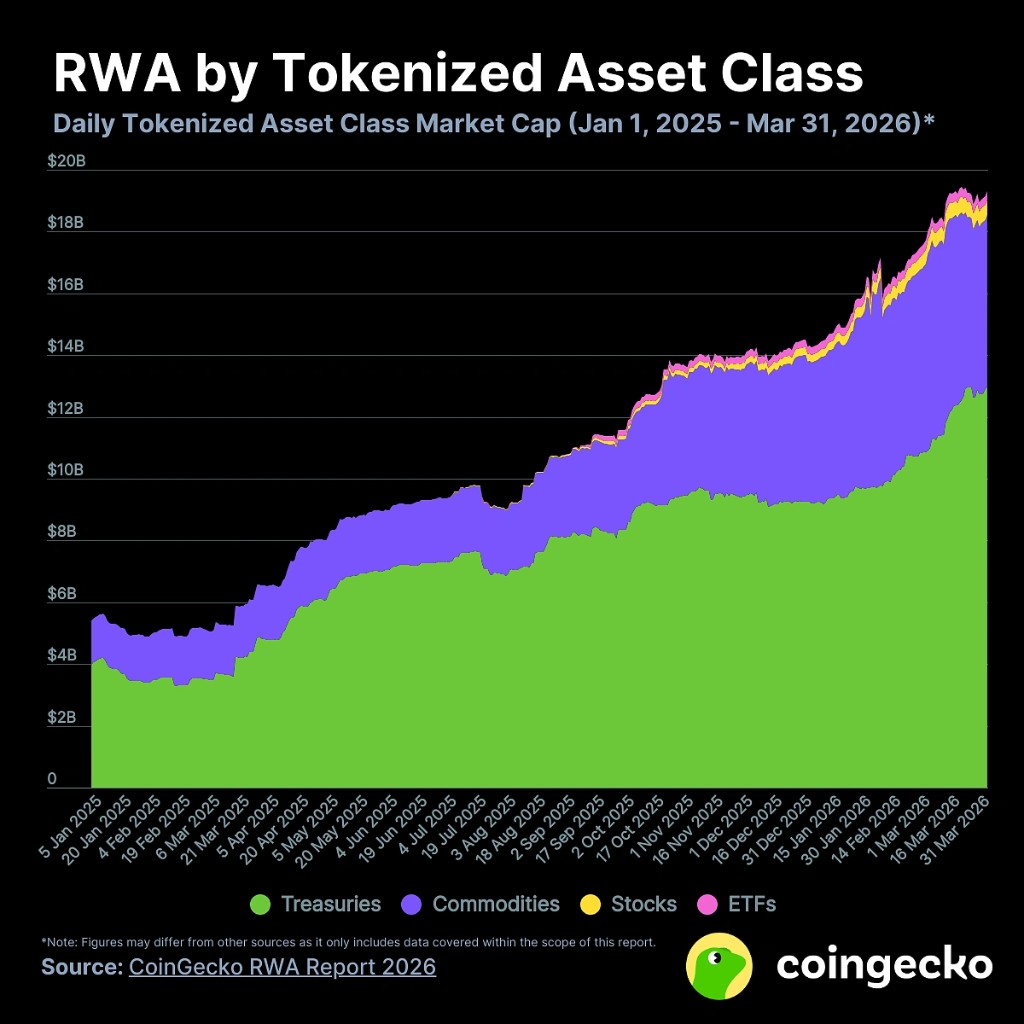
The honest nuance: not every RWA category is real yet. Mike Cagney (Figure CEO) said tokenized real estate is "way overhyped" — and he runs one of the largest tokenization platforms in the country. Tokenized Treasuries and tokenized commodities are scaling. Tokenized real estate still hits the same legal-title-transfer wall it always did.
For founders preparing token launches or treasury structures, this matters. Pre-TGE foundation work increasingly involves real RWA exposure decisions, not just speculative token mechanics. The space has graduated.
5. Tier-2 exchanges are surviving by pivoting hard.
Q1 2026 spot trading volume on centralized exchanges fell -39.1% to $2.7T (CoinGecko Q1 Report). March was the weakest month at $0.8T — the lowest single-month volume since November 2023. All top 10 spot CEXes saw declines between -23% and -55%. HTX took the biggest hit: -55%.
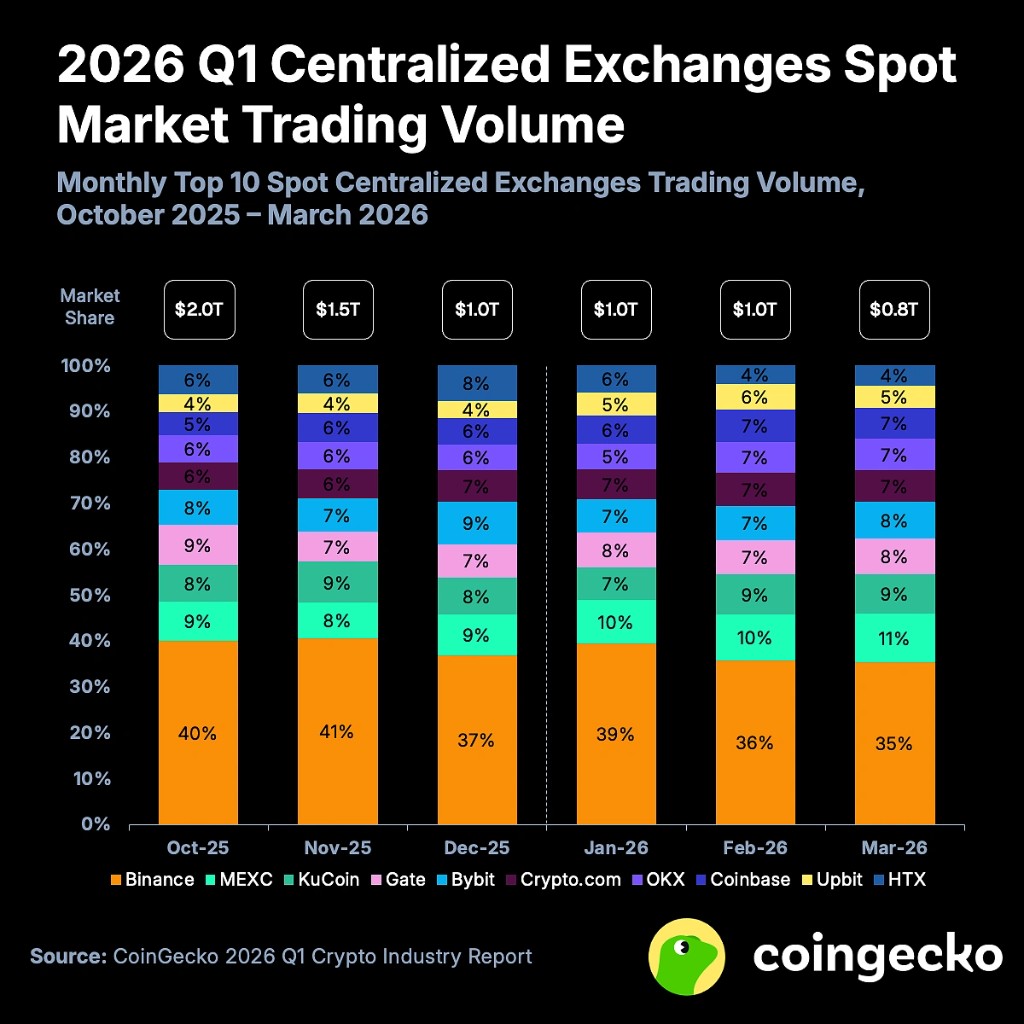
The DEX share of trading volume crossed 20% and is growing. T2 exchanges are squeezed between Binance dominance at the top and DEX growth at the bottom.
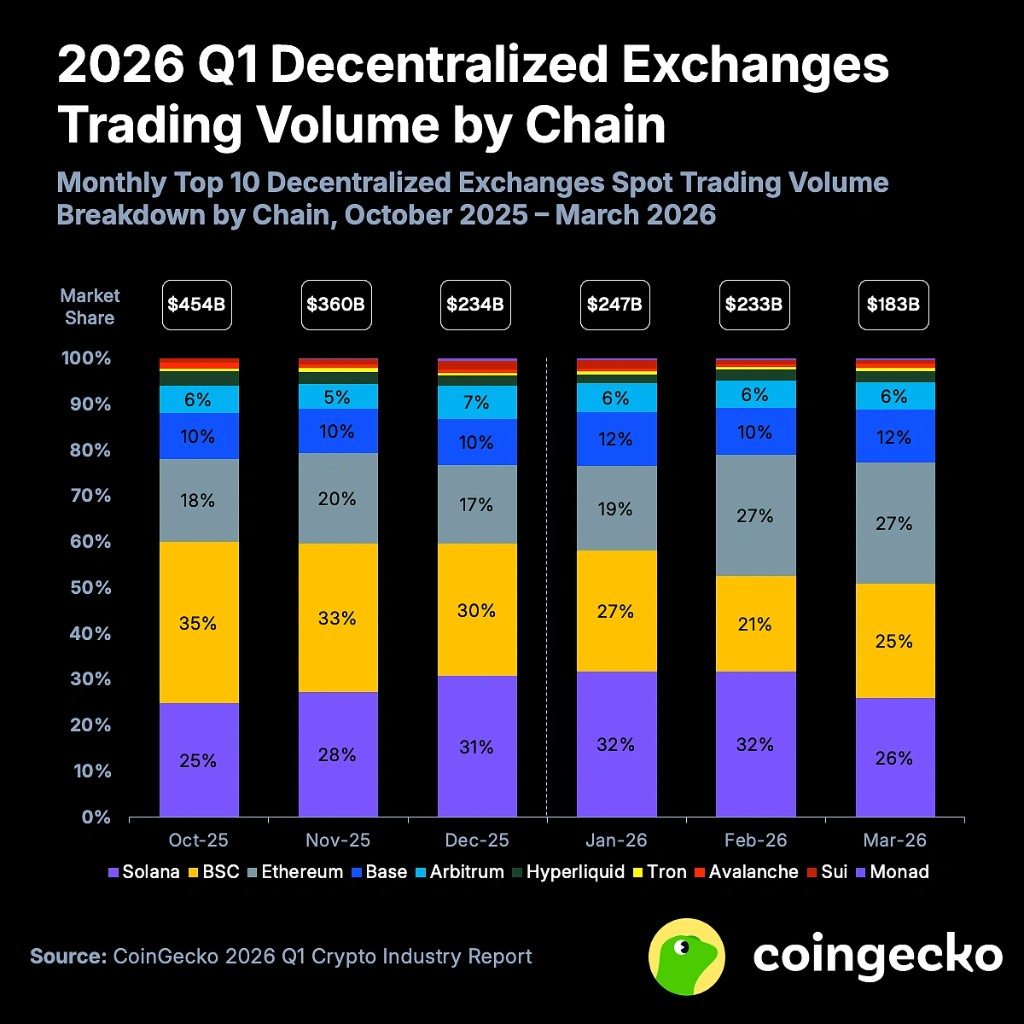
The pivot pattern was visible everywhere at the conference: aggressive AI agent token listings, perps product launches, and a clear shift toward commodity perpetuals. Hyperliquid's commodity perps are now ~30% of total open interest, fueled by 24/7 oil and gold demand. Binance and HIP-3 alone did $103B in TradFi perps volume in April 2026.
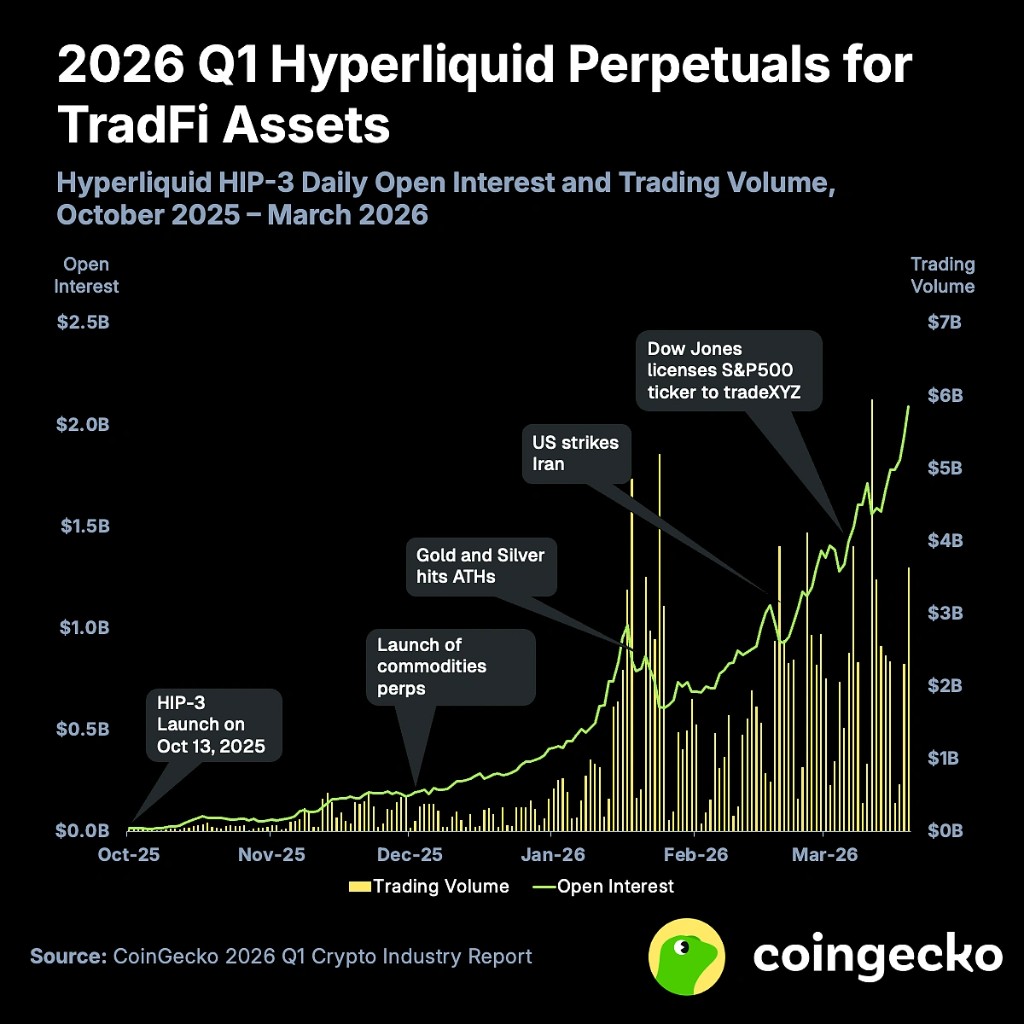
That's the survival narrative — exchanges chasing whatever order flow they can capture from a TradFi audience that wants 24/7 hedging.
6. Grants and on-chain governance got quieter.
Foundation execution is consolidating. Voter apathy on routine governance proposals, legal uncertainty in most jurisdictions, and thinner treasuries from the bear market mean DAOs are doing less and centralizing more.
Aave had two major service providers depart in early 2026. Multiple ecosystems quietly scaled back grant programs. Founders we spoke with want operators, not governance theater. The mood favors execution-focused foundations that just run — coordinating Cayman counsel, governance frameworks, treasury, vendor management — over expansive on-chain DAO experiments.
This isn't bearish for governance as a concept. It's a maturation: the field has learned what works and what was decorative. The next phase will probably look more like institutional foundation operations than the early DAO ideal — and that's likely the right call for projects that need to actually ship.
7. Trust is still the headline barrier.
A panel from the National Cryptocurrency Association, Circle, U.S. Bank and ChangeNOW called trust the primary barrier to broader crypto adoption. After a decade of conferences saying the same thing, that observation now has weight: institutional rails are moving onchain despite the trust gap, but consumer adoption isn't.
The agent economy collides with this directly. If users don't trust crypto with their own money, they're not handing autonomous agents wallets that can spend it. Whoever solves the verification + accountability + auditability layer for agent behavior solves a much larger problem than agent tooling.
What we're watching
After this week, here's where BitFashioned SEZC thinks the most interesting work happens over the next 6-12 months:
- Agent verification standards — beyond identity and reputation, into behavioral verification
- Tokenized commodities and Treasuries scaling — gold and T-bill perps are the cleanest RWA story right now
- TradFi rails moving onchain — DTCC's corporate actions experiment is the bellwether
- Foundation operations as a category — pre-TGE setup, governance, treasury, ongoing ops
- Regulatory clarity in 2026 — GENIUS Act, Clarity Act, and how Cayman/EU/Asian frameworks compare
If any of this maps to what you're building, reach out. We do engineering, advisory, and product work for teams operating exactly in this space.
Web sources
Sources and further reading for claims and links cited above (news, standards, and market data):
- QuickNode — ERC-8183 and agentic commerce
- EIP-8004 — Trustless Agents
- QuickNode — Circle nanopayments on mainnet
- CoinDesk — Consensus Miami 2026 Day 1
- CoinDesk — Consensus Miami 2026 Day 2
- CryptoBreaking — Consensus Miami Day 1 highlights
- CoinDesk Research — State of the Blockchain 2025
- CoinGecko — RWA Report 2026
- CoinGecko — Q1 2026 Crypto Industry Report
- CryptoNews — trust as adoption barrier (panel coverage)
- Canton — State of RWA Tokenization 2026
- a16z crypto — AI in 2026: three trends
BitFashioned SEZC is a Cayman-based Web3 R&D and engineering firm. We work with protocols, founders, and infrastructure teams across smart contracts, AI systems, ZK research, and CTO-as-a-service engagements.